2018年9月3日星期一

Use a Nebulizer Machine for Kids with Asthma

"/

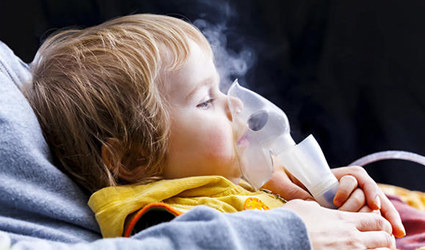
nebulizer machine is an electrical or battery-powered device used to deliver liquid drugs to the lungs in the form of breathable mist. It has an in-built air compressor which converts the liquid into a mist which is breathed through a face mask attached to the nebulizer machine.
Nebulizer machines, like inhalers, are prescribed to patients suffering from asthma, allergies or other respiratory illnesses. It is easier for children to use a nebulizer during an asthma attack, as they don’t need to breathe deeply for the mist to enter the lungs. Drugs like albuterol, ipratoprium and budesonide are used singly or as combination drugs as per a patient’s requirement.
nebulizer machine usually requires a stationary electric power supply and a placing platform to function but our team at Drugdu.com brings to you standard nebulizers along with small portable ones that are simple to travel with and which work on rechargeable/replaceable batteries. We also offer attractive pediatric nebulizer machines which are shaped like animals to make them kid-friendly and fun.
from Drugdu  https://goo.gl/QgQoHk

2018年8月21日星期二

Racial & Ethnic Inequalities in Childhood Cancer Survival Linked to Socioeconomic Status

"/

Published online in CANCER, a new study explains how socioeconomic status exhibits racial and ethnic inequalities in childhood cancer survival. The study findings may pinpoint the areas that require maximum resources so as to narrow the racial and ethnic survival gap for all main childhood cancers.
Survival rates are lower in black and Hispanic patients contrasted with non-Hispanic white patients regarding most childhood cancers. Rebecca Kehm, Ph.D., and her colleagues at the University of Minnesota School of Public Health and the Masonic Cancer Center tried to find out if racial and ethnic inequalities in childhood cancer survival are related to primary disparities in socioeconomic status
The team evaluated population-based cancer survival data from the Surveillance, Epidemiology, and End Results database for black, white, and Hispanic children, between 0-19 years of age, diagnosed from 2000 to 2011. Amid the diagnosed 31,866 patients, whites significantly outpaced black and Hispanic children in survival for numerous childhood cancers.
A significant link was noted between socioeconomic status, race/ethnicity and survival for acute lymphoblastic leukemia, acute myeloid leukemia, neuroblastoma, and non-Hodgkin lymphoma. On the contrary, socioeconomic status did not notably add to racial and ethnic disparities in survival for other types of childhood cancer like central nervous system tumors, soft tissue sarcomas, Hodgkin lymphoma, Wilms tumor, and germ cell tumors.
"These findings provide insight for future intervention efforts aimed at closing the survival gap," said Dr. Kehm. "For cancers in which socioeconomic status is a key factor in explaining racial and ethnic survival disparities, behavioral and supportive interventions that address social and economic barriers to effective care are warranted; however, for cancers in which survival is less influenced by socioeconomic status, more research is needed on underlying differences in tumor biology and drug processing."

from Drugdu  https://goo.gl/QgQoHk

System C Signs Contract to Offer Pooled Child Health Record in South West England

"/

System C has signed a contract to develop a collective child health information system in the South West of England. 708,000 child health records from South Gloucester, Bristol, Somerset and North Somerset, Devon, Torbay, Plymouth and Cornwall will be put to use by its CarePlus software.
Data will be collected from 10 acute hospitals in the South West, five clinical commissioning groups (CCGs), 376 GP practices and nine local authorities by the system which is slated to be launched this September.
James Bolt, head of public health commissioning, NHS England South West, said: “Health professionals will be able to manage queries about the health status of an individual child and populations much more efficiently and effectively via a single system. The result will be safer and more joined-up care.”
CarePlus stores data with regard to immunizations and vaccinations taken right from birth to when the person is19 years old, enabling care providers to track children along their preschool and school years.
John Grayland, head of child health services at Health Intelligence, said: “We are very excited to have been chosen to provide the Child Health Information Service in the South West of England. We will be responsible for approx. 708,000 children and have chosen CarePlus as the best software to enable us to run an effective service.”
Markus Bolton, joint chief executive of System C, added: “We are very pleased to see multiple small child health systems replaced by these large footprint solutions in this way because they are safer and users can manage children’s records much more efficiently. We are looking forward to working with our partners in the South West.”

from Drugdu  https://goo.gl/QgQoHk

Infancy ‘Obesity’ no Predictor for Obesity in Childhood

"/

Researchers headed by Charlotte M. Wright, MBBS, MSc, MD, professor, Community Child Health, School of Medicine, Dentistry & Nursing, University of Glasgow, Glasgow, Scotland, UK, wrote in Pediatric Obesity,“‘Obesity’ in infancy is not, in fact, an important risk factor for obesity in childhood,”
On the contrary, the majority of youngsters with high BMI/obesity in mid-childhood were not very heavy infants, the researchers discovered.
Dr. Wright and colleagues pooled data on around 2,500 children from three longitudinal growth studies to explore whether high weight in infancy foretells obesity in childhood. After adjusting for age and sex, the weighed infants were categorized as “overweight” or “obese”.
They observed that infants with more weight were five times more likely to have BMI ≥ 2 SD at 8 years of age. But, 64% of infants with increases in weight (≥ 1 SD) had a normal BMI at 8 years. In children with a BMI ≥ 2 SD at 8 years old, 50% had a BMI ≥ 2 SD for the first time at that age. Only 22% of 8-year-olds had a history of raised weight as infants.
In this study, raised weight in infancy (SD ≥ 1) was a significant risk factor for later overweight, and once a child had become overweight, this tended to persist, with three-quarters of those overweight at 8 years having been overweight earlier,” Dr. Wright and coauthors wrote. “However, we also found that over half the infants who were overweight had normal BMI by 8 years.”
Findings suggest that overweight infants usually stay overweight as children, however, infants with excessive BMIs seldom turn obese in childhood. “Thus, a high weight in infancy has a moderate positive predictive value for becoming overweight in mid-childhood, but not for becoming obese, and its sensitivity is very low,” the authors wrote.
from Drugdu  https://goo.gl/QgQoHk
By Ddu

Segmented Plates with Images made Kids Eat More Veggies

"/

A longitudinal study found that children in preschool consumed greater amounts of vegetables when their plates were divided and printed with pictures of fruits and vegetables.
Children took 13.82 grams more vegetables from printed plates per day than when they ate from plain white plates, and consumed 7.54 grams more, reported Emily Melnick, MPH, and Meng Li, PhD, both of the Department of Health and Behavioral Sciences at the University of Colorado Denver.
"I think the approach of using nudge methods to change what people eat is really important and there has been a lot of research on it in the general population, but there is little on how that affects kids," Li said. "If you think about what people eat and their early habits, the exposure kids have to food is really impactful in their adult behavior long-term."
There were 3 school days observed in a 1-week duration at two separate time points, and involved 235 children from 18 classrooms in Arvada, Colorado. The children were equally grouped in boys and girls and were of an average age of 3.8 years.
Children used white plates in the base duration. The intervention was conducted after 4 weeks, wherein children used the segmented plates with images. During the intervention, researchers gave an introduction to the plate to explain to the kids that the images on their plates were fruits and vegetables. The lunch menus remained unchanged each day.
Before and after consumption, the children's plates were weighed, and an average was calculated for the quantity of food taken and consumed. The intervention group saw the maximum effect on the second day when the lunch menu was devoid of fruit and included cucumbers and carrots.

from Drugdu  https://goo.gl/QgQoHk

NIH develops robotic exoskeleton to treat crouch gait in children

A robotic exoskeleton for the treatment of crouch (or flexed-knee) gait in children with cerebral palsy has been developed by US researchers from the Rehabilitation Medicine department of the NIH Clinical Centre.
Crouch gait is an excessive bending of the knees during walking and results in the progressive degeneration of the walking function. The new robotic exoskeleton device is intended to provide powered knee extension assistance at key points during the walking cycle.
The researchers tested the prototype of the exoskeleton in a study of seven children aged 5-19 years who were diagnosed with crouch gait from cerebral palsy and could walk a minimum of 30ft without the use of a walking aid.
Aimed at assessing the role of motorised knee extension assistance in safely and effectively minimising the disorder, the cohort study investigated the device’s effect on voluntary muscle activity during walking.
The study was also designed to quantify short-term alterations in lower limb gait biomechanics with the use of robotic knee extension assistance.
"The improvements in their walking, along with their preserved muscle activity, make us optimistic that our approach could train a new walking pattern in these children."
The results indicated that the exoskeleton was well-tolerated and all participants were able to walk independently without mobility aids or assistance from a therapist.
The study showed that six patients experienced knee extension improvements without a decrease in knee extensor muscle activity, with gains similar to or higher than average observed during invasive surgical interventions.
NIH Clinical Centre Rehabilitation Medicine department staff scientist Thomas Bulea said: “The improvements in their walking, along with their preserved muscle activity, make us optimistic that our approach could train a new walking pattern in these children if deployed over an extended time.
“This study paves the way for the exoskeleton's use outside the clinic setting, greatly increasing the amount and intensity of gait training, which we believe is key to successful long-term outcomes in this population."
from Drugdu  https://goo.gl/QgQoHk

Novartis pivotal data show children and adolescents with relapsing MS had an 82% lower relapse rate with fingolimod vs. interferon beta-1a

Novartis announced results from the Phase III PARADIGMS study, investigating the safety and efficacy offingolimod vs. interferon beta-1a, in children and adolescents (ages 10 to <18) with relapsing multiple sclerosis (MS). Treatment with oral fingolimod resulted in an 82% reduction in the rate of relapses (annualized relapse rate) in this patient population over a period of up to two years, compared to interferon beta-1a intramuscular injections (p <0.001)1. PARADIGMS is the first completed randomized, controlled clinical trial specifically designed for children and adolescents with relapsing MS. The results have been presented at the 7th Joint European and Americas Committee for Treatment and Research in Multiple Sclerosis (ECTRIMS-ACTRIMS) meeting on October 28, 2017 in Paris, France.
"There are currently no FDA-approved MS therapies for the pediatric population," said Dr. Tanuja Chitnis, Principal Investigator for PARADIGMS and Director of the Partners Pediatric Multiple Sclerosis Center, Massachusetts General Hospital, Boston, US, and Scientist, Ann Romney Center, Brigham and Women's Hospital, Boston, US. "We are encouraged by the reduction in the annualized relapse rate we've seen with fingolimod in this study. PARADIGMS was designed specifically for pediatric patients, who oftentimes have more frequent relapses than adults with early MS."
Additional data from the study demonstrated:
Secondary endpoints showed a significant reduction in the number of new / newly enlarging T2 lesions and Gd-T1 lesions in the brain in fingolimod-treated patients compared to those treated with interferon beta-1a, as measured by magnetic resonance imaging (MRI)1.
The safety profile of fingolimod in this study was overall consistent with that seen in previous clinical trials in adults. In this study, while more adverse events (AEs) were reported in the interferon beta-1a group, severe AEs were reported at a higher frequency in fingolimod-treated patients3.
An exploratory analysis found individuals treated with fingolimod had significantly less brain volume loss (measured by MRI), compared to those treated with interferon beta-1a1.
"Gilenya has been shown to improve outcomes for adults with relapsing MS. We're proud of having completed this head-to-head trial in children and adolescents with relapsing MS and are encouraged by the findings," said Fabrice Chouraqui, President of Novartis Pharmaceuticals Corporation. "The study reflects our ongoing commitment to the MS community."
Fingolimod, also known as Gilenya® in the US, is approved to treat relapsing forms of MS in adults. Gilenya is not currently approved for children and adolescents with relapsing MS. Novartis is working on submission with health authorities worldwide for pediatric patients.
from Drugdu  https://goo.gl/QgQoHk